side quests
Products
Things I build for myself, usually because I wanted them to exist. Each one is a chance to practise the whole loop — idea, prototype, users, iteration.
Crunchtime
liveFootball predictions with your mates. Pick the scores, share a link, settle it in a mini-league.
Read the story →YourBookPal
liveTrack what you're reading and talk to it — the themes, the easter eggs, the bits you missed.
write-up soonCelery
betaFODMAP and macro tracking that doesn't make eating feel like admin.
write-up soonMimesis
wipLanguage learning by imitation — shadow real speech until it's yours.
write-up soonClient products
products I’ve built for clients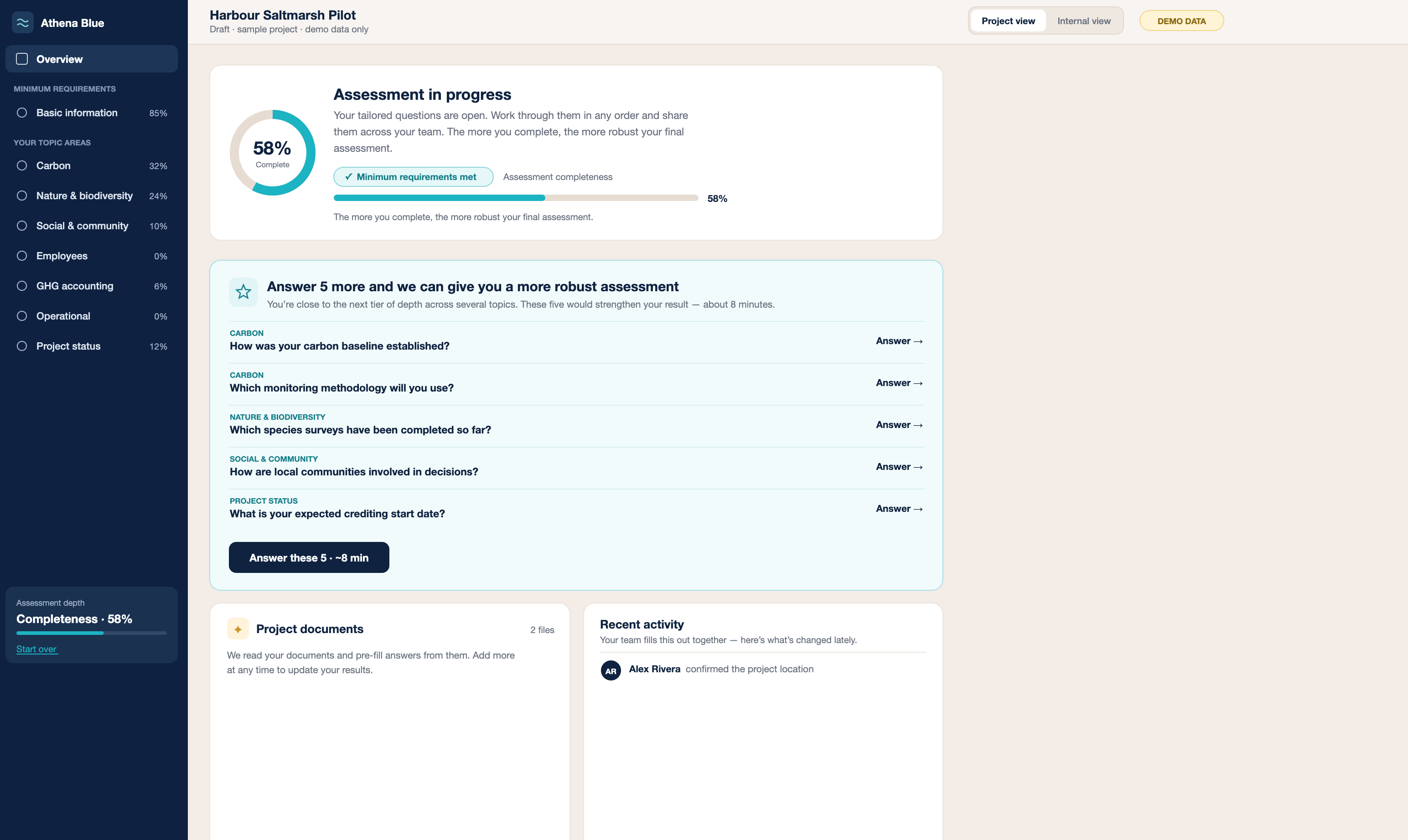
Athena Blue
AI assessment for coastal carbon. Extraction accuracy <50% → ~80%; prototypes that secured funding.
Read →Orbit
Business referrals, zero to one. 20% MoM user growth and the first five enterprise partners.
Read →Product reviews
close reads of products I admire
more reviews coming
how I take a product from idea to traction
The process
The same loop runs on everything here, from a side project to a funded startup. It isn't a straight line: each stage can send me back a step, and each pass cuts away more of what doesn't matter.
- 01before any code
Validate the problem
Talk to the people who live with the problem: what they chase, where the admin burns them out, why existing tools get abandoned. Write down the riskiest assumption and decide what evidence would kill it.
- interviews
- desk research
- Miro
- Notion
Crunchtime: weeks with league organisers before a line of code.
- 02days, not sprints
Prototype to learn
Build the cheapest thing that tests that assumption, not the product. Working prototypes beat specs: something people can click, and engineers can build from directly.
- Claude Code
- Figma
- Next.js
- LLM role-play testing
Crunchtime: Quick Predict — no login, picks live in the URL.
- 03measure, cut, repeat
Iterate with evidence
Put it in front of real users and watch what they do, not what they say. Cut what doesn't earn its place. Each pass should be simpler and hit harder.
- PostHog
- Mixpanel
- Hotjar
- A/B tests
- SQL
Athena Blue: 150 questions → a 20-minute adaptive intake.
- 04small, safe, often
Ship like it matters
One roadmap with stable IDs so nothing gets quietly re-argued. Staging that reproduces the interesting states. A security pass before anyone else's data goes in.
- Vercel
- Supabase
- Postgres RLS
- regression suites
Crunchtime: two privilege escalations found and pinned before launch.
- 05habit, not sign-ups
Grow and keep them
Design the growth loop into the product rather than bolting it on. Pick the funnel that really predicts success, and one health metric that tells you when it's quietly dying.
- funnels
- retention cohorts
- behavioural nudges
Orbit: 20% MoM growth; +36% referrals from behavioural nudges.
and then→ back to 01 with what the users taught me.
Automations & websites for small businesses
Moving to its own studio site. Ask me about it in the meantime.